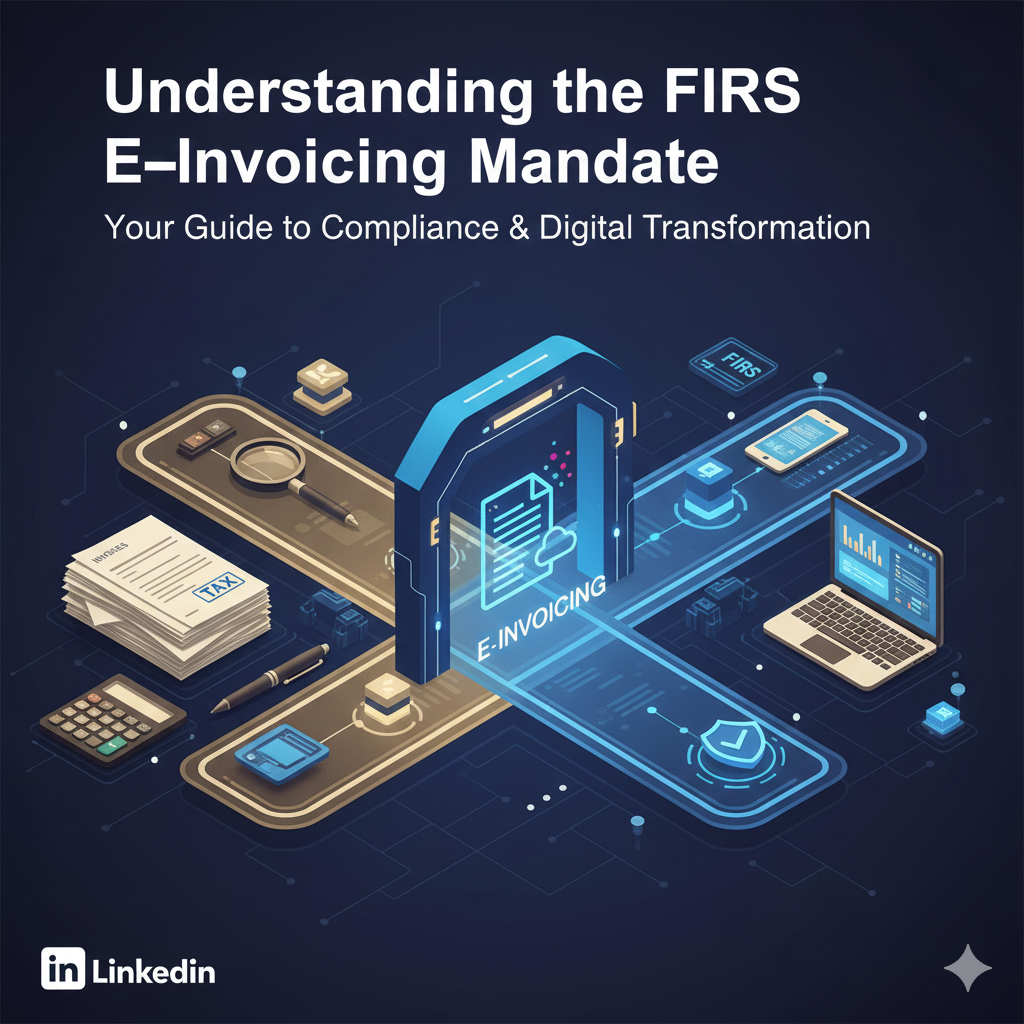
What Exactly is FIRS E-Invoicing? Beyond the PDF Email.
Let’s clarify what FIRS E-Invoicing truly entails. It’s much more sophisticated than simply sending an invoice as a PDF via email.
FIRS E-Invoicing mandates the electronic exchange of invoicing information directly between a supplier and a buyer, facilitated by an integrated electronic system. This system typically connects your business’s accounting, ERP, or Point-of-Sale (POS) software directly with the FIRS’s designated platform (often via an Electronic Tax Appliance – ETA, or a similar API integration).
The core elements include:
- Real-time or Near Real-time Reporting: Transaction data is transmitted to the FIRS system as sales or services occur.
- Validation & Authentication: The FIRS platform validates the invoice data, ensuring accuracy and compliance, and issues a unique identifier or digital signature, confirming its authenticity.
- Seamless Data Integration: Your internal systems must communicate directly and securely with FIRS’s infrastructure, automating what was once a manual and error-prone process.
Why the Shift? The Strategic Objectives of FIRS
FIRS’s objectives with this mandate are clear and align with international best practices:
- Enhanced Tax Compliance: Greater accuracy in VAT and other tax assessments, reducing under-declarations.
- Combatting Tax Evasion & Fraud: A transparent, real-time system makes it significantly harder to manipulate sales figures or generate fictitious invoices.
- Improved Administrative Efficiency: Automates data collection for FIRS, cutting down on manual audits and reconciliation efforts.
- Data-Driven Economic Insights: Provides FIRS with valuable, up-to-the-minute data for economic analysis and planning.
- Standardization: Ensures uniformity in invoicing formats and data across compliant businesses.
- Streamlined Processes: Potentially faster and more efficient VAT refund processing for legitimate claims, backed by verified data.
Who Needs to Act? Understanding the Scope.
Currently, the mandate primarily targets Medium to Large Taxpayers in Nigeria. However, a common trajectory for such digital tax initiatives is gradual expansion. Businesses within these categories must prioritize understanding their specific compliance obligations and timelines. Proactive engagement is key.
The Path to Compliance: Key Implications for Your Business
Implementing FIRS E-Invoicing is a project in itself, requiring foresight and careful planning. Here are the critical areas businesses must address:
- Technological Investment & Integration:
- Process Re-engineering:
- Data Accuracy & Governance:
- Staff Training & Change Management:
- Compliance & Risk Management:
Turning Mandate into Opportunity: Beyond Compliance
While the initial focus is often on compliance, E-Invoicing offers long-term benefits:
- Operational Efficiency: Automation reduces manual effort, minimizes human error, and frees up staff for more strategic tasks.
- Improved Cash Flow Visibility: Real-time data provides better insights into sales and receivables.
- Reduced Audit Burden: With data readily available and verified, the frequency and intensity of FIRS audits may decrease.
- Enhanced Business Intelligence: The clean, structured data generated can be leveraged for better internal analytics and decision-making.
Your Strategic Partner in This Digital Journey
Navigating a mandate of this scale requires a blend of deep financial understanding, robust technological expertise, and a proven ability to manage complex projects effectively.
Our experience lies precisely at this intersection. As professionals who combines extensive background in financial systems, IFRS implementation, and information system auditing, we understand the intricate financial and regulatory nuances. Coupled with our leadership in establishing and running Agile PMOs and managing complex digital transformation projects across multiple banks and government entities, We bring a holistic approach to mandates like FIRS E-Invoicing.
Whether you need to strategize your integration roadmap, implement new systems, streamline your processes, or simply ensure your project delivery is efficient and compliant, we are poised to help your organization not just meet the FIRS mandate, but to leverage it for competitive advantage.
The FIRS E-Invoicing Mandate is more than a requirement; it’s a catalyst for digital transformation. Is your business ready to embrace it strategically?